Because the expansion of Medicaid and creation of a state health insurance exchange will provide health coverage to several hundred thousand people, Kentucky will have workforce needs associated with meeting...
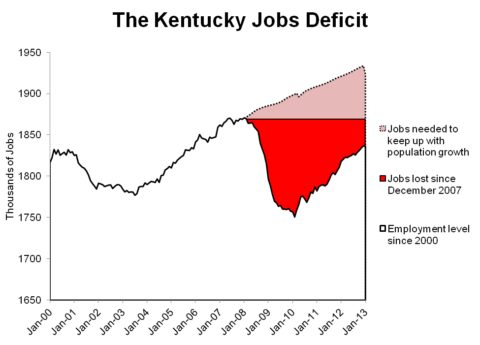
New estimates show that Kentucky has added on average 1,500 net new jobs a month for the last six months and 1,525 a month for the last year. So far,...
Kentucky’s economy continues to change, with a decline in manufacturing jobs and a shift toward more jobs in the service sector—a trend that has accelerated with the weak economy of...
The weak economy of the last few years has had far-reaching effects, but some groups have been harder hit than others. In particular, African Americans in Kentucky have suffered enormous...
There is no question that greater levels of education are associated with higher wages and employment rates in Kentucky, and employment has been declining among those with less than a...
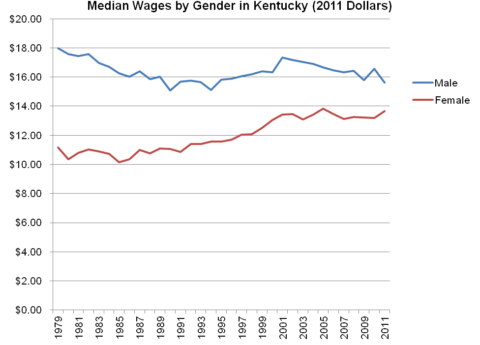
Working Kentuckians have experienced a lost decade in terms of wage growth, a trend that is undermining family economic security across the Commonwealth and will likely persist at least as...
In times of recession and high unemployment, it’s particularly hard for young people to find jobs. Competition for the jobs that do exist becomes more intense, making it harder for...
Between the start of the recession and February 2010, Kentucky lost 118,200 jobs. After several years of job growth, that gap has been trimmed to 35,100. However, ongoing growth in...
As in the U.S. as a whole, women’s participation in the paid workforce in Kentucky has grown over the last thirty years. Also, the gap in wages between Kentucky men...
We use cookies to ensure that we give you the best experience on our website. If you continue to use this site we will assume that you are happy with it.