
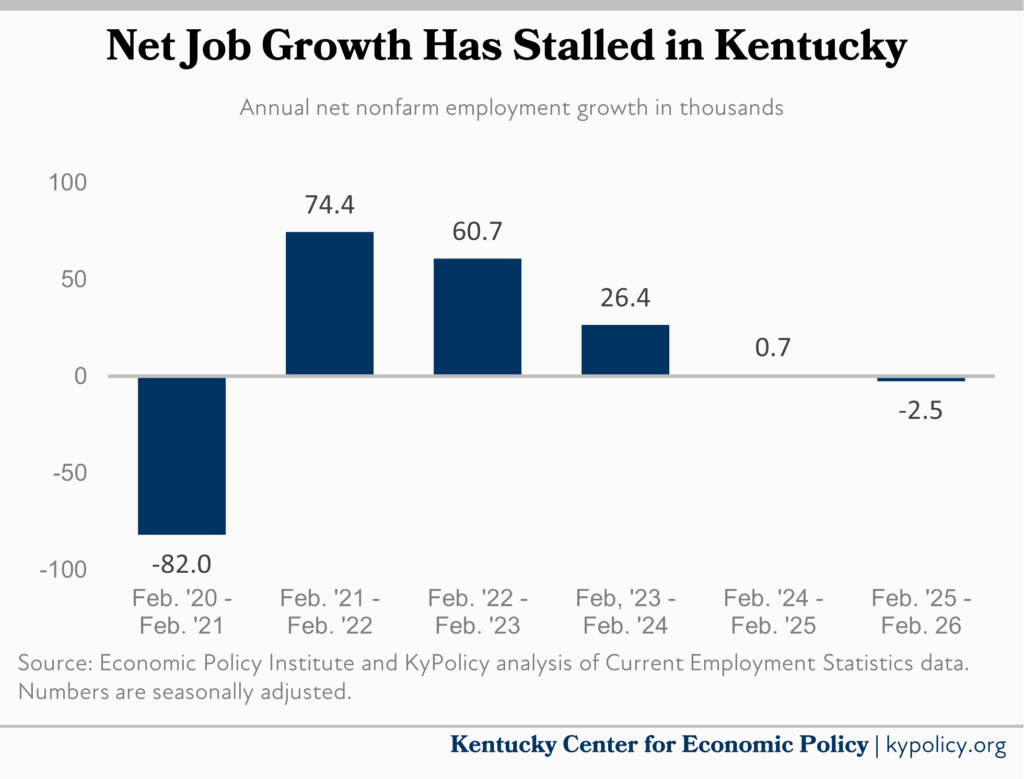
Kentucky’s job growth has stalled, with new federal data showing no net job increases in the state over the last two years. After a robust recovery from the COVID-19 pandemic, the job market began to weaken in 2023 and 2024 with the end of federal stimulus monies and as higher prices strained consumer spending. In the last year, tariffs and trade wars, federal budget cuts, price spikes, deportations and policy uncertainty have deepened the problem. Even as Kentuckians face a serious and rising affordability crisis, there has been no growth in the number of jobs that are available.
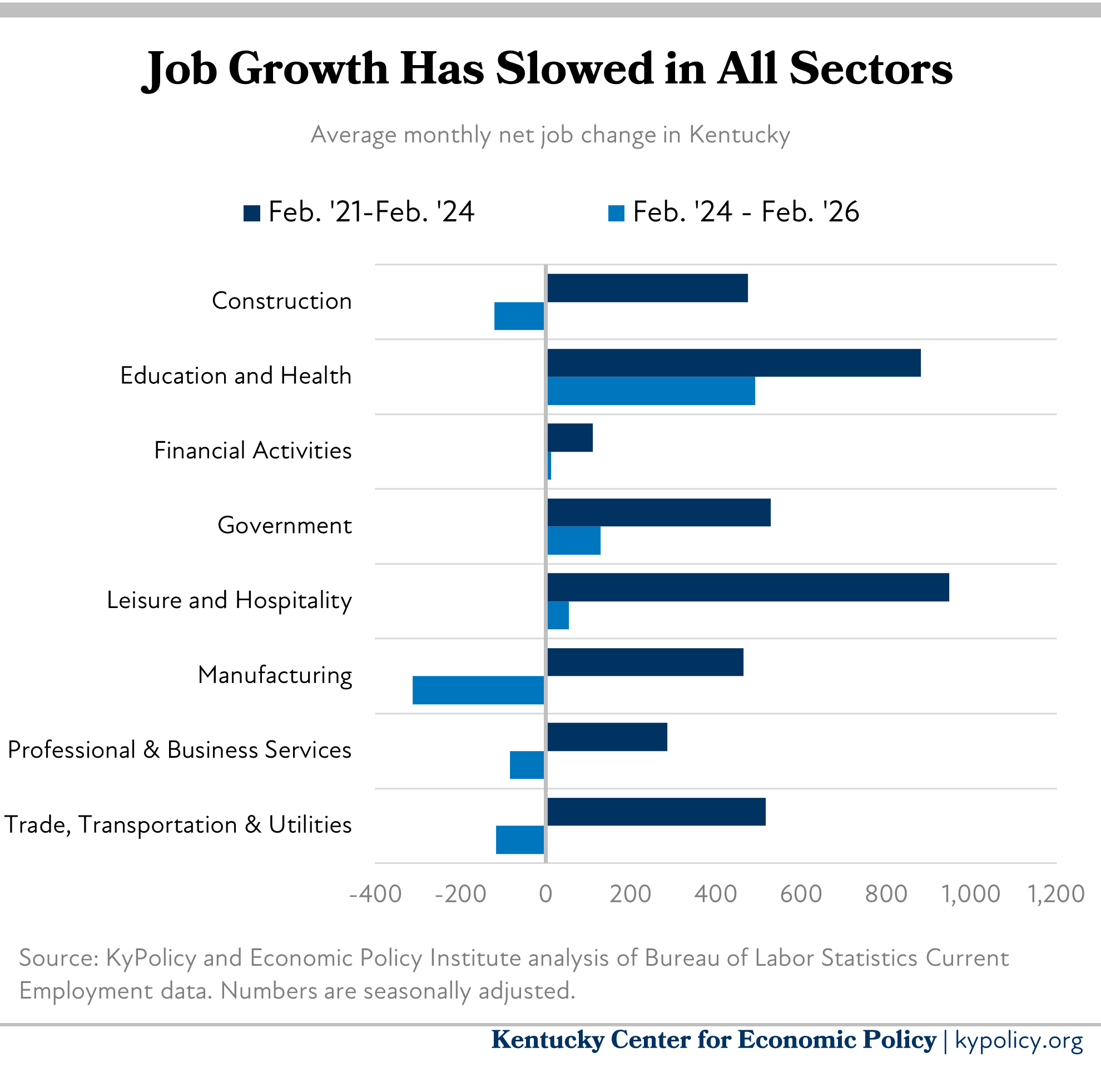
The revised data, which comes from the Bureau of Labor Statistics’ Current Employment Statistics, shows job growth has weakened in all major Kentucky industries, with net job loss in several including industries employing blue collar workers. After a robust recovery from 2021 to 2024, the state has lost net jobs in manufacturing; construction; trade, transportation and utilities; and professional and business services over the last two years. Nearly all job growth now is in health care.
In a separate survey, Kentucky’s unemployment rate is still low at 4.2%. But the rate is much higher for certain groups; for example, Wolfe County unemployment was 10.3% as of January. The unemployment rate also only counts those currently looking for work. Fewer Kentuckians are in the workforce than a couple of years ago, with the state’s labor force participation rate declining by 0.5% just in the last three months.
These job trends are not unique to Kentucky but reflect the national picture. Strong growth coming out of the COVID-19 pandemic is now in the past. While the state and national economy have avoided a recession, there are troubling warning signs.
The job market is essentially frozen. Consumer confidence is at record lows. Federal budget cuts from the One Big Beautiful Bill Act are going into effect with more coming in the next ten years. Financial markets may be in an AI bubble. And the gas price hike resulting from the war in Iran is a new strain on household budgets not reflected in this data. While a range of such factors cause concern going forward, job growth has already come to a halt.