Lawmakers in Frankfort have started the next two-year state budget process, and House leaders say this year will be different. Rather than introducing a plan and swiftly passing it through the Chamber, they filed what they call a “bare bones budget” that contains many cuts despite leaving more than $1 billion in projected revenue unspent. They’ve said those seeking additional funds should put their “best case forward” through hearings and meetings before the chamber moves the bill forward.
Improving this proposal will be necessary, because there are grave problems with the budget as filed. And hidden among the budget’s many words and numbers is a choice: whether to continue the radical path of state income tax elimination or halt the process that has already gone too far and is threatening vital public services.
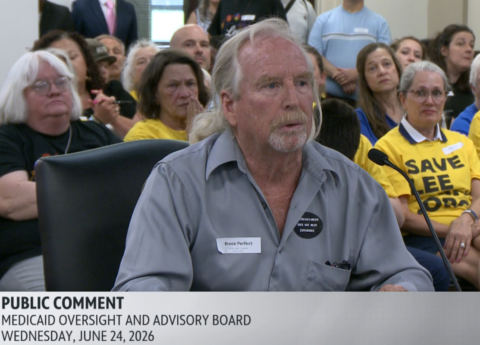
Among other problems, the introduced budget spends $800 million less than needed to fund Medicaid, which is seeing cuts from Congress that put 35 rural hospitals at risk. It doesn’t include new costs that H. R. 1 passed on to states for SNAP food assistance. It cuts higher education again, putting funding for those institutions 43% below inflation-adjusted 2008 levels. And it cuts SEEK payments to K-12 education by over $100 million, continuing 20 years of state disinvestment in Kentucky public schools.
Thankfully, there are ways to improve this budget that are practical and popular. And while you won’t find it spelled out in the text of the budget, the key to making those improvements is whether lawmakers commit themselves to triggering further reductions in the state’s individual income tax under the formula now in law.
Legislative leaders say they don’t budget to hit the triggers, which is determined by how much the budget leaves in reserves and how much the legislature is appropriating in relation to revenues, but also that cutting the income tax is their top priority. The truth is it’s impossible to create a budget without knowing whether it is likely to hit them. The budget itself is a process of deciding the things the trigger measures.
At $3.7 billion, the state’s Budget Reserve Trust Fund sits at an enormous 24% of the state revenues, far exceeding the 10% necessary to hit the first of two income tax triggers. Even if lawmakers spend money out of this so-called rainy day fund for capital and other projects in a separate bill, as expected, hitting it is almost assured.
In the case of the second trigger, the House budget as introduced spends $1.1 billion less than projected revenues over the biennium. With billions already in reserves, there’s no reason for legislators to stow even more money away in savings. The only reason to spend less than what’s available is to try to hit the tax cut triggers in at least one of the budget’s two years.
As lawmakers lower the individual income tax, which provided 41% of General Fund revenue before it began being cut, each cut becomes harder. These tax cuts started when the national economy was booming from pandemic stimulus and inflation was high, masking revenue losses for a time. But cuts already enacted are huge. The reduction of the top income tax rate from 5% in 2022 to 3.5% today costs $2.1 billion a year.
To deal with the growing difficulty of hitting triggers, which lawmakers barely missed again this summer, the General Assembly has moved the goalposts every year on their rules to make hitting them still possible. But absent shifting them again or simply scrapping the rules, hitting the triggers in this budget will require spending significantly less than revenue brought in. Which raises the question: how much will lawmakers be willing to make this initial bad budget better?
Recently, we sought to find out what Kentuckians thought about these choices. A random survey of Kentucky voters by national pollster Change Research in December asked whether they were benefitting from the state’s income tax reductions. Only 9% said yes, not surprising when you understand that 60% of state income tax cuts go to the wealthiest 20% of Kentuckians.
The poll also reveals that Kentuckians want legislators to have different priorities. Only 28% said lawmakers should focus on “reducing taxes for everyone, even if most of the benefits go to the wealthy,” while 72% said legislators should focus instead on “improving schools, improving healthcare, and bringing down the cost of living.” And Kentucky voters go even further. By huge margins, they prefer tax increases on the wealthy over budget cuts.
The budget debate this session is not just about particular line items. It’s about who our state is for.
This column ran in the Kentucky Lantern and Lexington Herald-Leader on February 11.