Large “hyperscale” data centers are spreading nationwide, and questions have grown about their true costs and benefits. These projects often move quickly and with limited transparency, leaving state and local leaders and affected residents little time to assess their full economic, social and environmental impacts. Among the many uncertainties is the basic question: Who will pay the significant financial costs associated with these facilities?
But while states that rushed to attract data centers are scaling back incentives and adding guardrails, Kentucky is still in the beginning stages of this process and has time to mandate transparency and establish clear protections that prevent unexpected cost burdens. The state is well positioned to evaluate and proactively address how increased needs for electricity and water could affect costs for ratepayers, the impacts of incentive programs on state and local budgets, and whether and to what extent these projects benefit the communities in which they are located.
What are data centers, and where are they in Kentucky?
Data centers are physical facilities that store, process, and manage substantial volumes of data. They are necessary to power internet services like cloud storage, e-commerce, video streaming, artificial intelligence, cloud computing and cryptocurrency operations. Data centers have been around for decades, ranging in size from just one room to entire warehouse buildings. The U.S. has more than 4,200 data centers, making the country the global leader in data center capacity.1
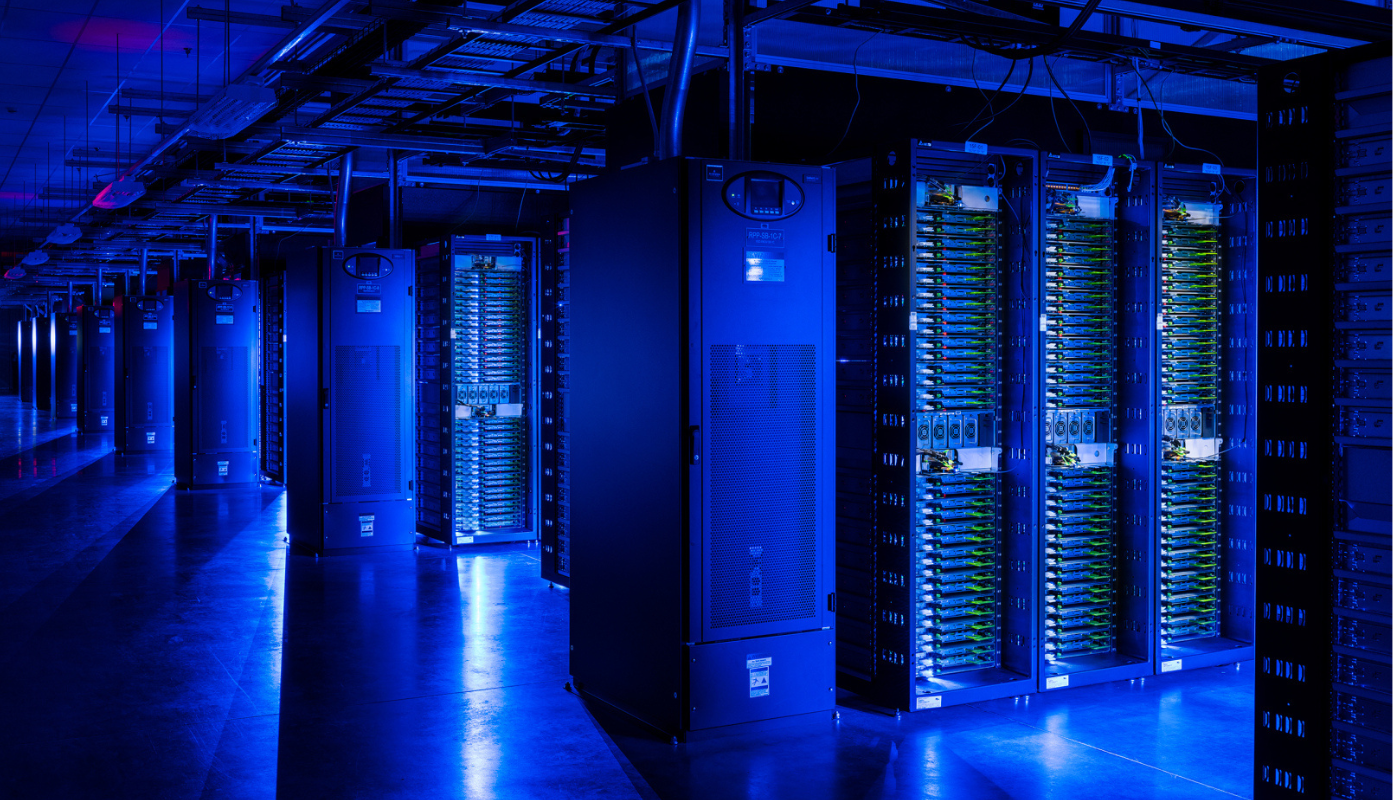
Recently, larger, “hyperscale” data centers have proliferated as the use of artificial intelligence (AI) and large machine learning programs has exploded. Hyperscale data centers differ from traditional data centers due to sheer size and capacity. They require a physical site large enough to house all associated materials, often including thousands of servers and miles of connection equipment. Hyperscale data centers also require much more energy, water and land.
There are also colocation data centers, a type of hyperscale typically owned by one company who rents out facilities, servers, bandwidth and space to other external companies. Distinguishing these colocation centers from other independent hyperscale centers is important, as they require different operations and come with different employment prospects.
Data center developers include massive corporations like Amazon, Meta, Microsoft and Google, as well as specialized companies like Equinix and QTS. While most existing data centers are in cities, most of the planned construction of data centers is in rural areas. Companies increasingly seek locations in states with limited regulation and oversight that offer tax incentives and have abundant agricultural land or sites with pre-existing infrastructure, making many areas of Kentucky prime targets.
Currently, two hyperscale data center projects are moving forward in Kentucky despite resident opposition. A joint venture project of Louisville real estate firm Poe Companies and Virginia-based PowerHouse Data Center will be developed in Louisville less than a mile from the Ohio River. The colocation center will be located on more than 150 acres of land and is expected to eventually use roughly 400 megawatts of electricity monthly — enough to power about 400,000 homes. The Louisville Metro Council is working on a zoning ordinance to regulate data centers but approved this data center before the ordinance was finalized.
Additionally, the company TeraWulf is proposing a $14 billion center on the site of the former Century Aluminum smelter in Hancock County, although there is an active petition from residents seeking to pause the project until the potential impacts and job creation numbers are publicly disclosed and defined. Other major projects are being proposed or have been proposed in Mason, Simpson, Meade, Oldham, and Mercer Counties. All of them have received local pushback.
Who decides about data centers?
The ability of hyperscale data centers to locate in a community, connect to the electric grid and access water resources is currently determined in Kentucky by local decision makers who are often simultaneously trying to understand the intricacies of data centers, adopt zoning laws to establish some guardrails and review these complex proposals. The deliberations are frequently hampered by a lack of transparency, one-sided data, project support from influential electrical utility companies and quick turnaround times required by the proposals.
Developers often require Nondisclosure Agreements (NDAs) as they seek to protect proprietary or commercially sensitive information. NDAs limit the amount of relevant information that decision makers can share, hindering their ability to request independent analysis from outside sources and limiting public access.
Kentucky incentivizes data centers but can learn from cautionary tales in other states
The recent upsurge in proposals for large data centers in Kentucky follows the enactment of hefty sales tax incentives for up to 50 years for virtually everything purchased to outfit and maintain data centers beginning in 2024 for projects in Jefferson County and followed with an expansion statewide in 2025.
As of May 2026, no qualified data center projects have been approved for Kentucky’s state incentives, so it is not possible to know what the potential fiscal impact might be. But it is instructive to look at the revenue losses from state level cryptocurrency mining tax incentive packages passed by the General Assembly in 2021. The incentives enacted for cryptocurrency mining facilities included a sales tax exemption on all energy purchased for applicants that applied prior to July 1, 2025 and an exemption from the utility gross receipts tax imposed by schools, with the incentives sunsetting in 2030.2
Because of the application deadline in 2025, cryptocurrency mining facilities qualifying for the incentive are now fixed, and no new facilities can apply, which limits the overall revenue loss the state will experience. Even so, this exemption has caused Kentucky to miss out on nearly $24 million in revenue over the last four fiscal years according to the Department of Revenue. This amount is much less than anticipated losses from broad sales tax exemptions for hyperscale data centers since those projects will be exponentially larger and the incentives will apply for much longer.
Experiences of other states that have provided subsidies for data centers reveal more about potential revenue losses that can result from these incentive programs. Currently, at least 40 states have enacted some kind of public subsidy for data centers. The most common is a sales tax exemption for the materials and technology purchased, either initially or on an ongoing basis. In addition to sales tax exemptions, data centers may also receive:
- Special rates for utilities, typically negotiated with the utility companies.
- Breaks for real property taxes on buildings and land.
- Breaks for personal property taxes on equipment like servers, server racks, and cooling systems.
- Credits for corporate income taxes.
While not every state shares data on revenue losses from data centers, those that do illustrate how substantial losses can be. An audit revealed that in fiscal year 2025, Georgia’s sales tax exemption for data centers resulted in a loss of $433 million. The same report also found that 70% of data center projects would have located in Georgia without the subsidy. Virginia, which has the largest concentration of data centers in the country, has tax exemptions that cost the state over $1.6 billion annually and result in an estimated return in state revenue of just 48 cents per $1 spent.
In response, proposals in Georgia and Virginia as well as several other states have been introduced to enhance transparency and control costs by:
- Capping total program costs and per-project subsidies.
- Implementing or tightening maximum time limits that apply to tax breaks.
- Requiring per-project and aggregate reporting available to the public of subsidies received, jobs created, average wage of jobs created and water and energy consumption.
- Excluding local taxes (sales or property) from available exemptions.
- Banning NDAs covering any project receiving the subsidy.
Additionally, as states have started to experience the impact of hyperscale data centers on state resources and local energy supply, the conversation is shifting in many places from “how can we attract data centers?” to “how can we ensure that data centers pay their full infrastructure and environmental costs?” In this regard, Illinois is requiring data centers to become carbon neutral on a specified timeline to receive tax incentives. Iowa is altering its data center incentives to impose limits on sales tax exemptions. Minnesota is rolling back its incentive programs by removing the state sales tax electricity exemption.
While these facilities generate considerable short-term construction employment, the permanent workforce is small relative to the public investment required to attract them. Anywhere between 1,000 to 10,000 short term construction jobs can be generated from a project depending on scale — job opportunities that come at a time when construction employment has stalled due to a weakening economy. Unions like the International Brotherhood of Electrical Workers have advocated to make these projects union built.
But once construction is completed, data centers provide comparatively few long-term jobs in relation to the size of the tax incentives typically offered, the cost of operating the equipment and the amount of land needed. And the public cost of jobs is steep: a 2025 Good Jobs First report found some states report that, for every dollar spent on data center tax exemptions, they have only seen 30 to 48 cents return to state revenue— and another one of their studies found that at least 10 states already lose more than $100 million per year in tax revenue to these incentive programs. That figure is also growing fast and unpredictably: Texas revised its FY 2025 cost projection from $130 million to $1 billion in the span of just 23 months. That poor return is aggravated by the fact that only 10% to 30% of jobs from state corporate subsidy deals typically go to residents who are not already employed.
A recent Brookings study examining the employment effects of data centers found that they create fewer jobs than industry advocates typically claim. The study also found the employment effects of a data center depend on the facility type. Hyperscale centers built by cloud and AI companies to run their own workloads see more job gains impacting sectors beyond the data center whereas colocation facilities who lease space to remote tenants, like the one approved in Louisville, do not.
The study notes that this distinction has direct implications for how these projects are subsidized. In counties hosting hyperscale facilities, public incentives average just 2% of total construction investment. Companies choose those locations based on power, land and fiber infrastructure — not tax breaks. In counties hosting colocation facilities, subsidies represent 62% of total investment. In other words, the projects generating the fewest jobs are the ones most dependent on public dollars to happen at all.
Who pays for data centers’ need for power?
Another concern about hyperscale data centers is that they require tremendous power grid capacity, as one facility can use as much electric power as 80,000 U.S. households per year. Some forecasts suggest that by 2028, data center energy demand could double or even triple, potentially accounting for as much as 12% of total U.S. electricity consumption. This need for increased power generation has revived coal plants planned for complete closure, new gas line proposals and a renewed interest in nuclear energy. Utility companies and electric grid operators are building new energy infrastructure to meet both actual and anticipated data center electricity demand, and those costs are being passed on to households due to lack of legislation that requires data center owners to pay the costs associated with their energy use.
Utilities submit proposals to state regulators when they want to raise rates to cover the cost of new infrastructure, outlining needed revenue and how costs will be distributed among different customers. A utility can argue that new infrastructure built to serve data centers strengthens the overall grid and benefits all customers and seek to incorporate the costs of powering massive data centers into broad rate increases.
Utility companies do not profit primarily from the utilities they provide to customers, and instead their profit margins are tied to earning returns on investment in their physical assets. Utility rates for customers are structured to ensure that the companies are guaranteed to recover the costs of providing service while also being allowed to profit on the money they spend on capital investments through what is called their “rate of return on equity.” Therefore, utilities are motivated to build more infrastructure like power plants and transmission lines to meet anticipated demand, because every year they recoup the cost of their investment in those assets plus an additional percentage of those costs. If the anticipated data centers fail to materialize or end up going elsewhere, households are left to foot the bill for the utility companies’ new builds. Utilities may also pursue negotiated rates with data centers; if the negotiated rate falls below the utility’s cost to serve the data center, the shortfall may be recouped from other customers through future rate increases.
During the 2026 legislative session, a bill was introduced that would have established protections for existing utility ratepayers from cost increases due to data centers. The sponsor of the bill noted in an interview that Google, Meta, and Amazon and the electric cooperatives in Kentucky were “on board with this bill,” but that Kentucky’s two major utility providers – Louisville Gas & Electric and Kentucky Utilities – “remained critical.” The bill passed the House by a 90-8 vote but then stalled in the Senate and did not pass despite bipartisan support. The bill would have included:
- A $75,000 non-refundable application fee;
- A requirement that data centers pay upfront for new transmission and grid upgrades;
- Long-term contract guarantees to ensure utilities recover costs directly from the data center;
- A requirement that data centers with peak demand over 250 megawatts secure a dedicated energy resource; and
- A requirement that data centers must comply with these new provisions to remain eligible for existing tax breaks
The importance of this issue and the concern about it from legislators of both parties was demonstrated by the introduction of five additional bills during the 2026 legislative session related to data center regulation, none of which received hearings.
To create transparency and provide more information and protection to ratepayers, in addition to a bill similar to HB 593, Kentucky lawmakers could consider options being implemented in other states, like:
- Requiring utilities to publish frequent, transparent load forecasts that include prospective data center demand.
- Requiring data centers to disclose their energy and water use, enabling better electric grid planning and water resource planning.
- Providing incentives for or requiring best practices to reduce grid stress by mandating that data centers generate their own clean electricity during times of peak demand, requiring data centers to participate in energy demand management programs, and intentionally sitting data centers where energy resources are available.
- Equitably allocating increased energy costs by requiring that utility companies equitably allocate the costs of energy system upgrades that serve large loads through mechanisms like large load tariffs.
- Enacting moratoriums on utility shutoffs as an added layer of protection from rate increases that may result due to pre-emptive increases in power grid capacity in anticipation of data centers.
The long-term effects of the proliferation of these hyperscale centers and colocation facilities are far from understood due to the rapidly developing landscape. Kentucky will need to carefully grapple with serious policy questions at the state and local levels about the potential benefits, costs and obligations of this evolving technology in a way that involves all Kentuckians.

- Estimates of existing data centers vary depending on how a tracker defines “data center” and how they choose to classify multiple buildings housed on one center location
- In addition, an existing economic development incentive program was expanded to include cryptocurrency mining facilities with capital investments of over $1 million. The incentives include up to 100% of sales taxes paid on the purchase of tangible personal property, up to 100% of income taxes owed, and the ability to impose wage assessments against employees of up to 4% with a maximum recovery of 50% of the capital investment. However, it does not appear that any cryptocurrency mining facilities are currently receiving these incentives.