The federal Earned Income Tax Credit (EITC) has been shown to help working families afford necessities; provide short- and long-term benefits to children; and support local economies. If Kentucky adopted...
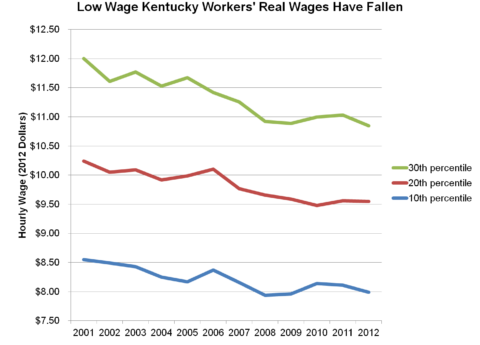
Stagnant or falling real wages for many Kentucky workers threatens their standard of living and is leading to growing income inequality. One of the causes of inadequate wages is the...
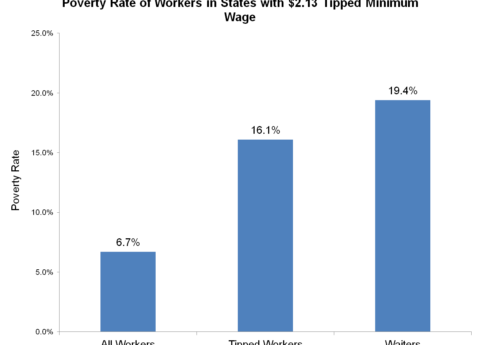
The decline in the real value of the minimum wage for tipped and non-tipped workers has been contributing to poverty and inequality in Kentucky. Increasing the state’s minimum wage to...
If Kentucky moves forward with the Medicaid expansion, uninsured workers across Kentucky's economy could gain health coverage. Workers at restaurants, construction sites, grocery stores and child care centers are among...
9,500 uninsured Kentucky veterans and thousands of their family members could gain health insurance coverage if the state makes the right decision to move forward with the Medicaid expansion now...
While the primary pension challenge Kentucky faces is how to find the revenue to pay back the existing unfunded liability, much of the attention has instead focused on moving new...
The cash balance plan for new workers proposed in Senate Bill 2 would make paying Kentucky’s unfunded pension liability harder by adding approximately $55 million in state costs over the...
This presentation was given at the Kentucky Public Pension Coalition press and legislator briefing held January 30, 2013. KPPC Press Briefing Presentation KPPC Press Briefing Text
As Kentucky legislators consider changes that could cut pension benefits for nurses, social workers, police officers and other public sector workers, they should keep in mind four important facts. Public...
We use cookies to ensure that we give you the best experience on our website. If you continue to use this site we will assume that you are happy with it.Ok