After 15 rounds of state budget cuts through the recession and recovery, the foundation of Kentucky’s economy—our schools, higher education systems, health services and more—have been significantly weakened. But final...
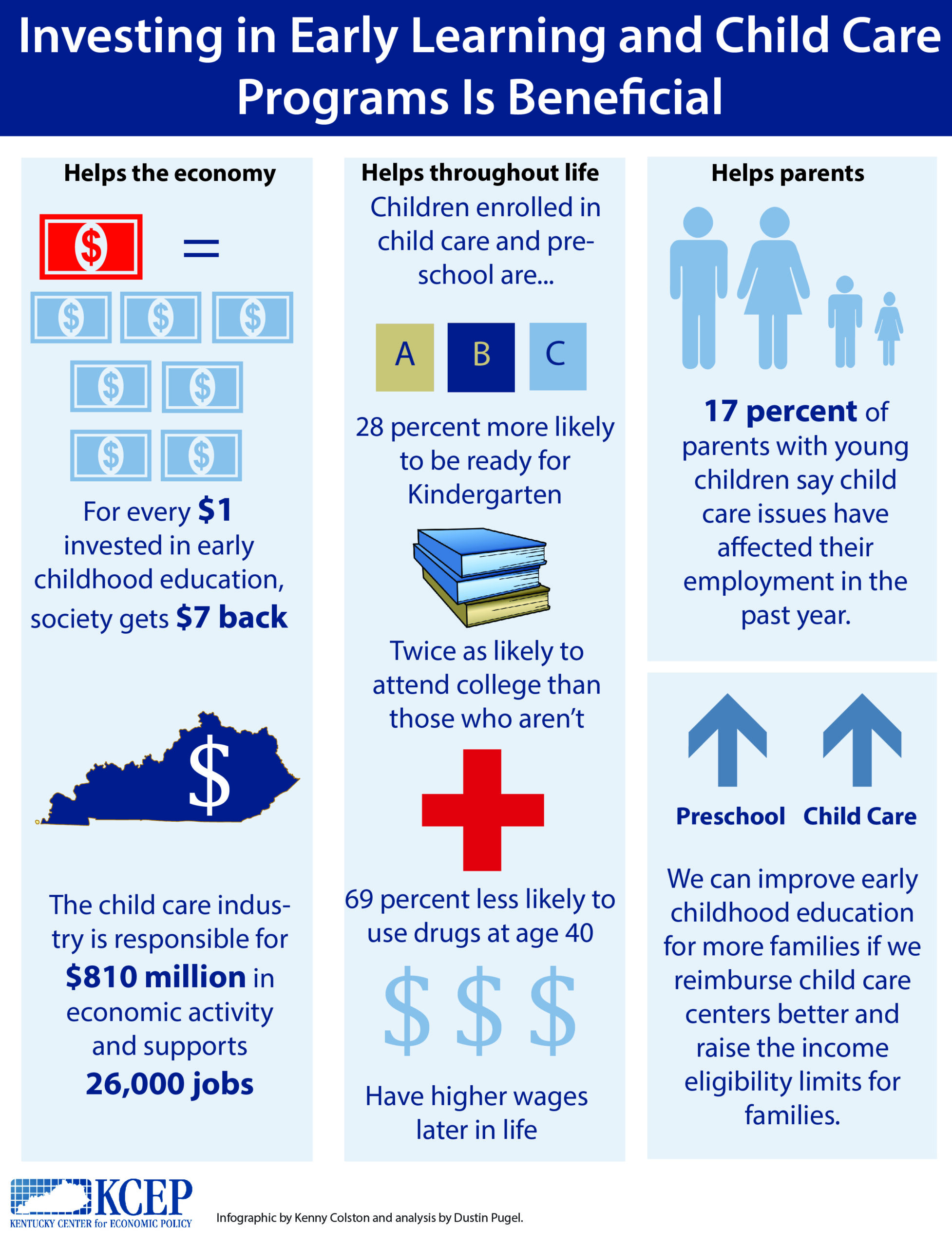
Quality early childhood education, through child care and preschool, has been shown to have multiple layers of value: It helps the economy by generating jobs and economic activity, as well...
A new report from the Center for American Progress (CAP) ranks how well the states have addressed the problems facing low-income families through 16 indicators. Kentucky’s results are mixed, with...
For years millions of scholarship dollars have been diverted away from Kentucky’s need-based financial aid programs to the General Fund. Studies have shown that need-based financial aid: • Increases college...
Governor Bevin’s budget proposal would not improve — and would even worsen — the state’s college affordability problems. Deep budget cuts to public universities and community colleges are expected to...
According to law, 55 percent of lottery profits are supposed to pay for need-based scholarships (after $3 million is given to literacy programs). For years, though, millions of scholarship dollars...
A total of 425,782 Kentuckians were insured through the Medicaid expansion as of October. By county, between 3.7 and 19.1 percent of the population were covered and a total of...
More than 800 Kentucky workers have benefited across the Commonwealth because of the executive order raising the minimum wage for state workers and contractors signed last summer by outgoing Gov....
Those advocating to scale back Kentucky’s highly-successful Medicaid expansion cite a concern about its cost to the state. One way to help buffer costs would be to raise the minimum...
We use cookies to ensure that we give you the best experience on our website. If you continue to use this site we will assume that you are happy with it.