For the second election in a row, voters have made it clear that affordability is their key concern. A look at data from the past two years shows why. Here in Kentucky, the median household is paying about $4,127 more annually for the same goods and services than they were at the end of 2024.
The biggest contributor to that cost hike is the rise in gas prices. The median Kentucky household is paying $856 more a year for gasoline based on recent prices, 20.7% of the $4,127 increase. High tariffs are also driving price growth. Because both petroleum and import taxes go into the price of many purchases, inflation in the price of “household goods and services” is the second-biggest category of inflation at $503 a year, a price jump of 9.9%. Housing also continues to be a major driver of strained family budgets.
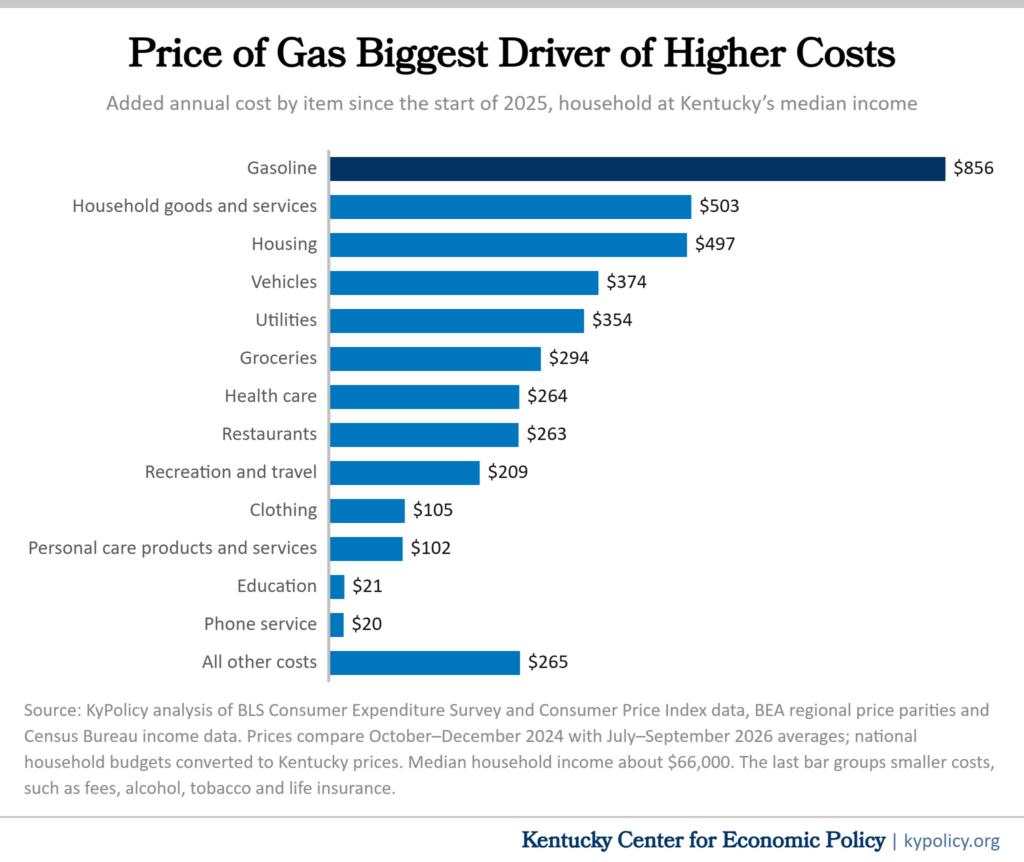
Low-income Kentucky households are feeling this pinch even worse. While the typical household has experienced a 5.3% increase in its basket of purchases as a share of income, the increase is about 9.0% for households with an income of approximately $26,000 a year (the 20th percentile of incomes). People with less income also have less room in their family budgets to adjust to rising prices — for example, choices are limited for a family that is already buying the cheapest generic option at the grocery store.
Affordability will continue to be the key challenge until federal and state lawmakers address it. A couple of immediate steps are obvious: ending the war in Iran that has driven up the price of gas and abandoning across-the-board tariffs that are increasing the price of goods and fostering trade wars.
But that’s not enough. Affordability was a problem before the war and the tariffs. Many additional actions should be taken to address the cost of living. That must include policies to increase worker wages and bargaining power as well as those that directly address the cost of essentials. See KyPolicy’s affordability agenda for how that can happen at the state level.